AI guidance that adapts
ROID uses AI-powered guidance informed by your history, goals, and health context so your recovery mindset can feel more tailored than a generic plan.
Recovery support on iOS
ROID supports shoulder injury recovery for people who want smarter guidance, supportive content, recovery-aware health tracking, and a community that understands the frustration of trying to train carefully while healing. It is built to help users stay informed, supported, and consistent.
Shoulder recovery is difficult because people are often trying to balance caution with consistency. They do not just need generic workout hype. They need better guidance, clearer recovery context, and reassurance that progress still matters even when training has to change.
ROID is useful in that setting because it connects AI guidance, health tracking, content, and community. Instead of recovering in isolation, users can stay close to information and people that help them make smarter choices day to day.
ROID uses AI-powered guidance informed by your history, goals, and health context so your recovery mindset can feel more tailored than a generic plan.
Health data like sleep and recovery signals can help users stay more in tune with how they are doing instead of guessing based on motivation alone.
Recovery feels easier when it does not feel lonely. ROID gives users a social fitness environment where progress, setbacks, and consistency can be shared.
Messaging and community features help users stay connected to people who can encourage them, answer questions, and help recovery feel less isolating.
ROID can help users approach recovery more thoughtfully, but it should support professional care, not replace it. That makes the guidance more responsible and realistic.
ROID combines training, nutrition, health tracking, and supportive social features in one free iOS app so recovery does not have to live across disconnected tools.
Recovery is not only about what you stop doing. It is also about having the right information, motivation, and community around the process. ROID includes creator-led programs, fitness content, short-form media, social posts, and messaging that can help users stay engaged while their training needs to become more recovery-minded.
That makes ROID especially useful for people who want shoulder recovery support that feels alive and connected. Instead of just reading advice in isolation, users can stay close to content and people that reinforce better habits.
For related product areas, visit the health tracking page, the messaging page, or the workout accountability page.
ROID can support better habits around recovery, but it is not a medical device and not a replacement for a physical therapist, doctor, or other qualified clinician. Anyone dealing with pain, limited range of motion, worsening symptoms, or uncertainty should seek professional care.
The hard part of shoulder recovery usually isn't the rehab protocol — it's everything around it: staying active without aggravating the joint, keeping the habit alive while volume drops, and knowing whether you're trending better. ROID helps with that perimeter: health tracking shows your activity and sleep trends, the AI factors your recent training into suggestions, and the community keeps you connected to fitness while you rebuild.
Recovery decisions should still run through a professional. ROID is not a rehabilitation program or a substitute for medical care — exercise-based shoulder rehabilitation has strong evidence behind it precisely when it's properly prescribed and progressed. Use ROID to stay consistent and informed around the plan your clinician gives you, with health tracking doing the bookkeeping.
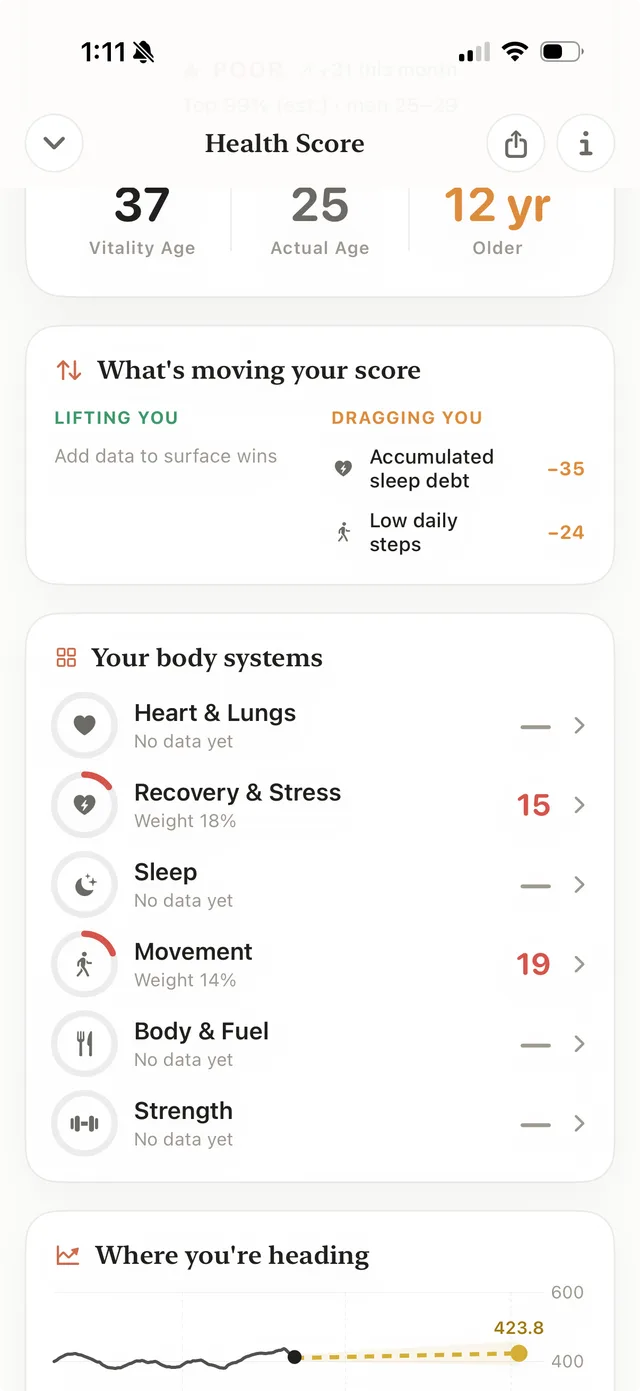
ROID can support shoulder injury recovery by helping users stay consistent, track recovery-related health signals, access helpful fitness content, and stay connected to a supportive community while they train more carefully.
ROID uses AI-powered guidance informed by your training history, health data, and goals to make recommendations feel more adaptive than a generic one-size-fits-all plan. That can be especially helpful when someone is trying to train around recovery more thoughtfully.
ROID includes fitness content, creator-led programs, short-form media, social posts, and messaging features that can help users stay informed, supported, and motivated while focusing on recovery-minded training habits.
No. ROID is not a substitute for professional medical advice, diagnosis, or treatment. Anyone dealing with pain, injury, rehabilitation, or uncertainty should work with a qualified healthcare professional.
If you want shoulder injury recovery support with AI guidance, helpful content, health tracking, and a supportive community, ROID is available now on iOS.
Download on the App Store